2-G HINGE MOTION Direction Control (2-D) means Clubface alignment control. The Clubface can make three motions through Impact - Hood, Close and Lay-back. "Hooding the Clubface", normally, can only reduce the Clubface Angle so only the Putter can actually be Hooded to any advantage (2-B), (2-C-4). Of the two remaining, we can use one or the other or both. That is - "Closing" without "Lay-back" (10-10-D). "Lay-back" without "Closing" (10-10-E) and simultaneouus "Closing" and "Lay-back" (10-10-C).
Doesn't tell me what Lay-back IS. I don't know what "hood " means either (I thought it meant 'closing'). The only other motions I can think of is (1)none and (2)opening.
The only other mention of Lay-back is in..
11-10 HINGE ACTIONS
Des. Term Description
A Horizontal Only Single Hinge - Closing Clubface - No lay-back
B Vertical Only Single Hinge - Clubface lay-back - No closing
C Angled Single Hinge - Simultaneous closing and lay-back
D Dual Horizontal Dual Hinges - Closing Clubface - No lay-back
E Dual Vertical Dual Hinges - Clubface lay-back - No closing
Visualize a club head on the ground with a pencil attached and perpedicular to the club face. The angle the pencil makes with the ground is essentially the loft of the club. The leading edge of the club face would also be arranged such that it is perpendicular to the target line.
Now, pure rotation of the club head such that the leading edge is no longer perpendicular to the target line about the vertical (anti-gravity) axis would be pure opening / closing of the club face.
Rotation of the club face about the axis comprised of the leading edge of the club face would be pure layback (think pencil coincident with the vertical axis - pointing straight up). Layback is the adding of loft without any change in the open / closeness of the club face. Hope this helps.
__________________ _________________________________
Steph
Distance is Magic; Precision is Practice.
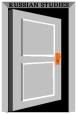
Normal door (pictured above): Closing only -- Horizontal Hinge
Door turned 90 degrees clockwise (e.g. cat door): Layback only -- Vertical Hinge
Door turned anywhere between 1. and 2.: Simultaneous Closing and Layback -- Angled Hinge
Hinge is located in your Left Shoulder, but is controlled via the Flat Left Wrist.
Hinge Action produces a Hinge Motion of the Clubface. It is Clubface Control.
Note that a Hooding Motion (where the Clubface loft is decreasing) cannot be produced in golf. The door would need to be turned 90 degrees anticlockwise! Or you can twist the blade on the Hinge so that it is less than 90 degrees to its Plane of Rotation. However, you can decrease the Clubface loft at Impact Fix by placing the Ball further behind Low Point. But this Hooded Clubface is a static position as opposed to a Motion.
__________________
tongzilla
Last edited by tongzilla : 04-11-2006 at 03:15 PM.
Visualize a club head on the ground with a pencil attached and perpedicular to the club face. The angle the pencil makes with the ground is essentially the loft of the club. The leading edge of the club face would also be arranged such that it is perpendicular to the target line.
Now, pure rotation of the club head such that the leading edge is no longer perpendicular to the target line about the vertical (anti-gravity) axis would be pure opening / closing of the club face.
Rotation of the club face about the axis comprised of the leading edge of the club face would be pure layback (think pencil coincident with the vertical axis - pointing straight up). Layback is the adding of loft without any change in the open / closeness of the club face. Hope this helps.
Thanks for your prompt reply. I presume you mean "the adding of loft" to mean (for example) making a 8i out of an 6i?
Thanks for your prompt reply. I presume you mean "the adding of loft" to mean (for example) making a 8i out of an 6i?
Yes. This is why vertical hinging (pure layback) is most often recommended for instances where a high, soft shot is needed (think flop, think short bunker, think butterfly with sore feet ). The vertical hinge technique effectively adds loft through impact.
__________________ _________________________________
Steph
Distance is Magic; Precision is Practice.


 ). The vertical hinge technique effectively adds loft through impact.


 Hybrid Mode


